Strength Training for Longevity: What the Research Actually Says
- Liz Shaw

- Jan 29
- 3 min read
Strength training is having a moment — but unlike many fitness trends, the research behind it points to something far more significant than aesthetics. This is about longevity.
Strength training has enjoyed a huge rise in popularity over recent years — but why now?
Partly, this reflects the nature of the fitness industry itself. Trends come and go: from aerobics to Spin to HIIT, each era has its moment, often driven as much by marketing as by evidence. But with strength training, something more meaningful is happening. Its rise signals a genuinely positive shift away from purely aesthetic goals and towards long-term health, function, and longevity.
Time for change
In the 1970s and 80s, fitness marketing was dominated by appearance-focused messaging: “be slim and happy”, “feel the burn and watch the pounds melt away”. Today, thankfully, the conversation has evolved.

Of course, wanting to look good isn’t inherently negative — feeling confident in your body can play an important role in self-esteem. But we are now asking deeper questions: How can we stay healthy for longer? How do we remain independent as we age? What actually supports a good quality of life?
Strength training sits firmly at the heart of those answers.
The longevity debate
Current research increasingly suggests that two of the biggest predictors of all-cause mortality are cardiovascular health and strength (as cited by Dr Peter Attia, among others). Both matter — and both deserve attention.
Heart and lung health ensure oxygen, nutrients, and hormones are transported efficiently around the body, while also supporting immune function. Strength, meanwhile, underpins our ability to move through life with confidence: to get up from a chair, climb stairs, carry shopping, lift luggage, and run after grandchildren.
Longevity isn’t just about living longer — it’s about living well.
Flesh forgets, bone remembers
One of the most powerful (and often overlooked) benefits of strength training is its impact on bone health.
Bone and muscle are living, dynamic tissues, constantly being broken down and rebuilt. This rebuilding process is stimulated by stress — which is why weight-bearing and resistance-based exercise are so important.
When we strength train — whether using body weight, gravity, resistance bands, dumbbells, or kettlebells — muscles act as levers on the skeletal system. This mechanical loading signals osteoblast cells to lay down new bone tissue, helping to maintain or improve bone density.
This is why strength training is such a powerful tool in preventing — and managing — osteopenia and osteoporosis.

Muscle: far more than aesthetics
For decades, muscle was largely associated with bodybuilding — and many women actively avoided strength training for fear of “bulking up”. Thankfully, we now accept that muscle is not just about appearance, and understand that significant muscle gain (aka "bulking up) requires very specific training, nutrition, and hormonal conditions. What strength training does reliably build is resilience, capability, and long-term health. It is one of the most important organs for long-term health and vitality.
Muscle:
supports metabolic health
stabilises blood sugar
protects against chronic disease
reduces the risk of falls and frailty
helps preserve independence as we age
Maintaining muscle through regular strength training — alongside adequate protein intake — is essential for ageing well and extending healthspan, not just lifespan.
As Dr Gabrielle Lyon succinctly puts it:
“The quality of your life is a direct reflection of your muscle health.”
Strength brings the conversation full circle
If we return briefly to the old “look good, feel good” narrative, strength training still delivers — just in a healthier, more empowering way. Building muscle helps us:
feel stronger and more capable
move with confidence
look more defined
maintain independence into older age
Interestingly, emerging research suggests that muscle health may be a stronger predictor of longevity than body fat — further reinforcing the shift away from “thin is happy” and towards a far more positive message: be strong.
“Use it or lose it”
One final — and crucial — point: muscle must be used to be maintained.
From around the age of 30, we naturally begin to lose muscle mass. This process accelerates with inactivity, illness, hormonal change, and ageing — but it is not inevitable. The good news is that it is never too late to start strength training: the important part is starting safely.
This is why I am passionate about teaching strength training with clear instruction, sound technique, and carefully considered progression. Meeting people where they are, and guiding them step by step, allows strength to be built in a way that is effective, sustainable, and genuinely life-enhancing.
My approach
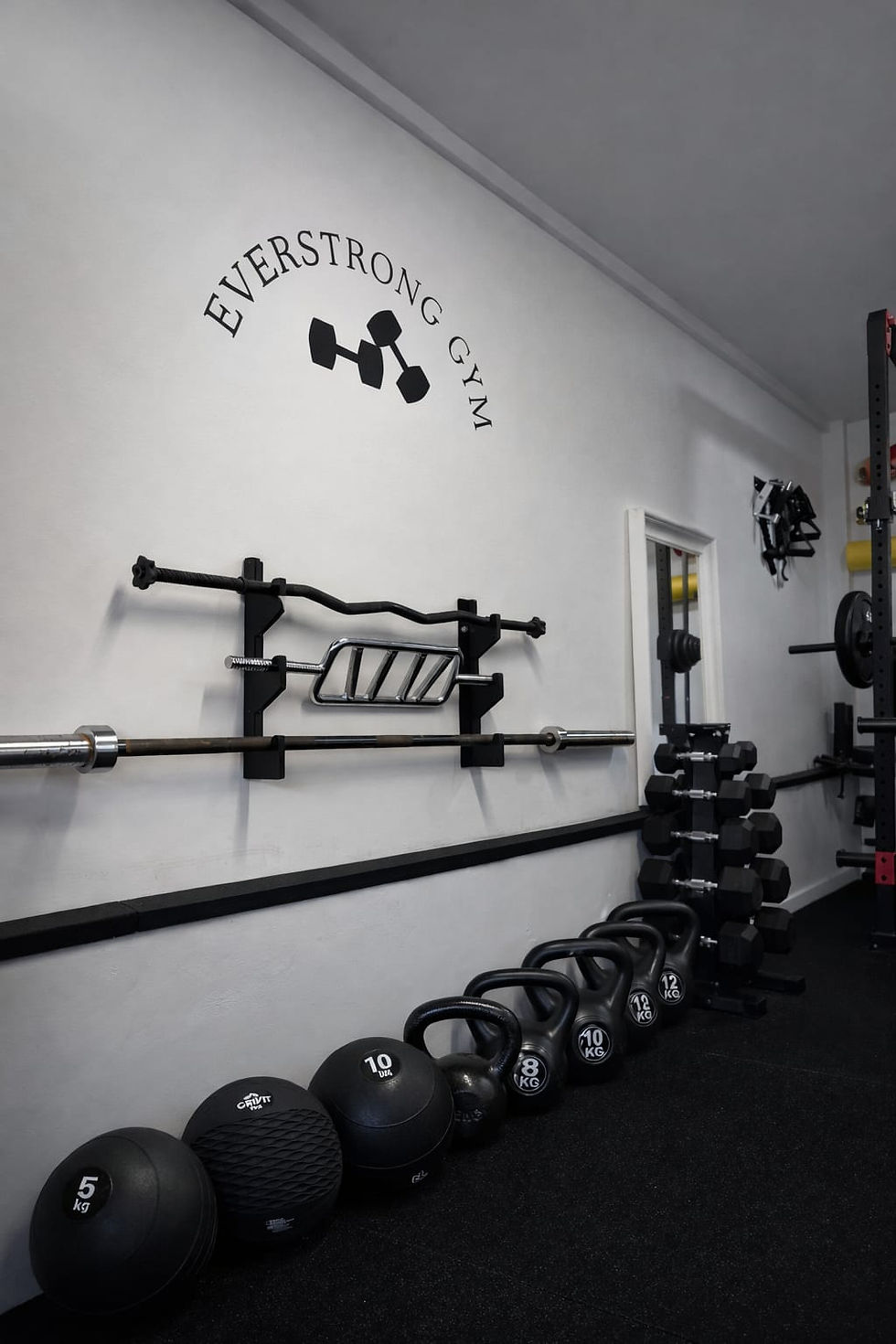
This philosophy underpins how I teach strength training in the Everstrong Gym — prioritising safe technique, progressive loading, and strength that supports real life, now and in the years to come.
If you would like to start strength training with expert guidance in Ealing, you can find out more about personal training and strength sessions at The Everstrong Gym here.


Comments